
Well Read
"A heroic plunge" / Somadelic Journey

As many of you know, I’ve long been a subscriber to the “Making Sense” podcast with Sam Harris. Whether you agree with his politics or not, Sam’s always been an articulate prodigy. I was first introduced to his work in the late-1980s at a poetry gathering at the home of my late friend Wes Nisker, at which Buddhist teacher Jack Kornfield read a short but deeply insightful piece that Sam (then in his early 20s) had sent him, imagining a guru/disciple dialogue. We were all astonished by its wisdom and unexpected humor. I met Sam in person in March of 1993 (a decade before The End of Faith made him internationally famous), when a small group of meditators sat with Urgyen Tulku Rinpoche for the “pointing out” instruction in the Kathmandu Valley (though honestly, I was far from ready for such an initiation). I bring Sam up because his recent exchange with a guest — the thoughtful and empathetic Susan Cain, author of the best-selling book Quiet — took me by surprise:
Sam Harris. How are you thinking about the future of books now, as a writer?
Susan Cain. Oh my gosh, I think about it all the time. ...I’m aware that I myself read many fewer books than I used to, but that when I do read them, I still really adore the experience and feel like there’s nothing else.
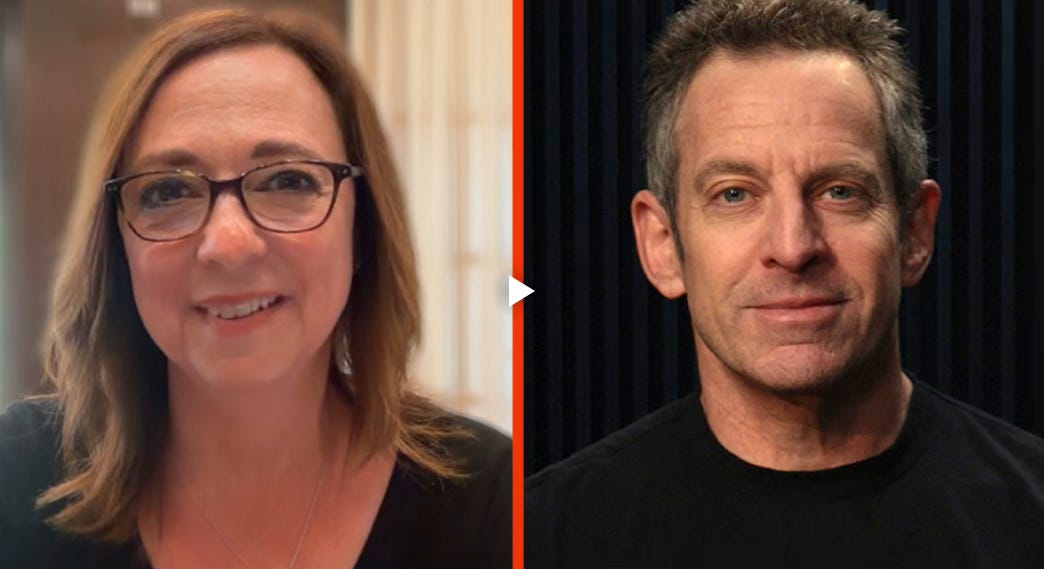
Sam Harris ...I think many people are feeling that it has somehow become more difficult to sustain their attention on anything, really, without getting interrupted by some self-interrupting device—that is, their smartphone. But books in particular. Just the feeling of sitting down to read for an hour almost feels like a heroic and anachronistic plunge into the past, for which we’re all nostalgic... even for those of us whose job it is to read books. I can’t say that I’ve stopped reading books, but I do notice that reading for pleasure, especially, is something that is just in a zero-sum contest with everything else that can be done for pleasure.... But my groaning shelves with thousands of books are looming over me at all times. I’m concerned it’s degrading into this [guilty and] bittersweet relationship where, when am I going to find the time to make the progress I want to make through my own library?
Susan Cain. I know exactly what you mean. And for me, the guilt of that relationship is embodied in the fact that I used to just know exactly where every single book sat on my bookshelf. Because I just spent so much time looking at the shelves. Just looking at them made me so happy. So I just memorized their placement. And now I have no idea where any book is. But I do still have these moments—and they usually happen when we’re traveling, or on vacation—I can focus much more. There’s something about removing the “everydayness” of life, and the feeling of daily responsibilities, where I can still get back into that state. Which doesn’t mean that I’m not still checking my phone more than I wish I were; but I’m still really loving books. And every time we’re traveling, I vow to do the same thing as soon as we get home—and then it all flies away.
I was taken aback by Sam’s line — “Just the feeling of sitting down to read for an hour almost feels like a heroic and anachronistic plunge into the past.” — Because that activity remains a central and indelible part of my life. There are a lot of things I can’t really do any more, a trolley full of lifelong pleasures that are being compromised or straight out denied to me by Parkinson’s. But sitting down and reading, for at least an hour at a stretch, is not one of them. My general practice (unless I have a guest) is to get into bed sometime between 10 and 10:30 p.m. and dive into one of the three books I’m currently reading. That’s my nightly jam: a novel (tonight John Barth’s astonishing The Last Voyage of Somebody the Sailor), a couple of nonfiction books (Patricia Lockwood’s pyrotechnic Priestdaddy and Michael Pollan’s A World Appears), and the New Yorker, usually about a week or two behind.
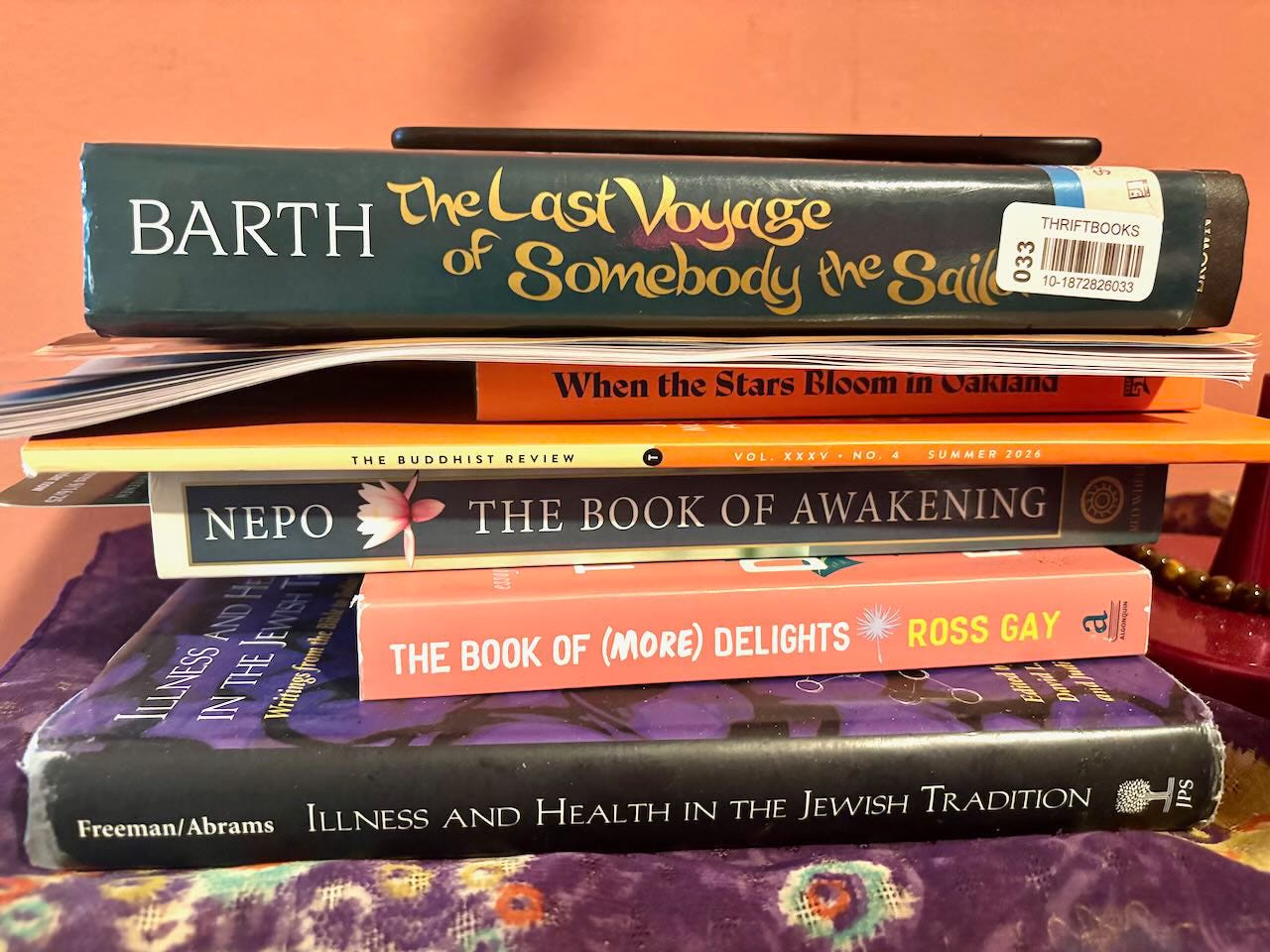
People are often amazed that I read more than one book at a time. For some reason, probably the way I’m hardwired, I don’t find this difficult. If I have an hour or so before sleepy-time I’ll read each of the above for about a quarter of an hour, find a natural stopping point, and move onto the next. It keeps me from getting bogged down.... and seems paradoxically, to sharpen my attention.
Sometimes, of course, there’s a book I can’t put down (most recently, Virginia Evans’ The Correspondent). But that’s increasingly rare.
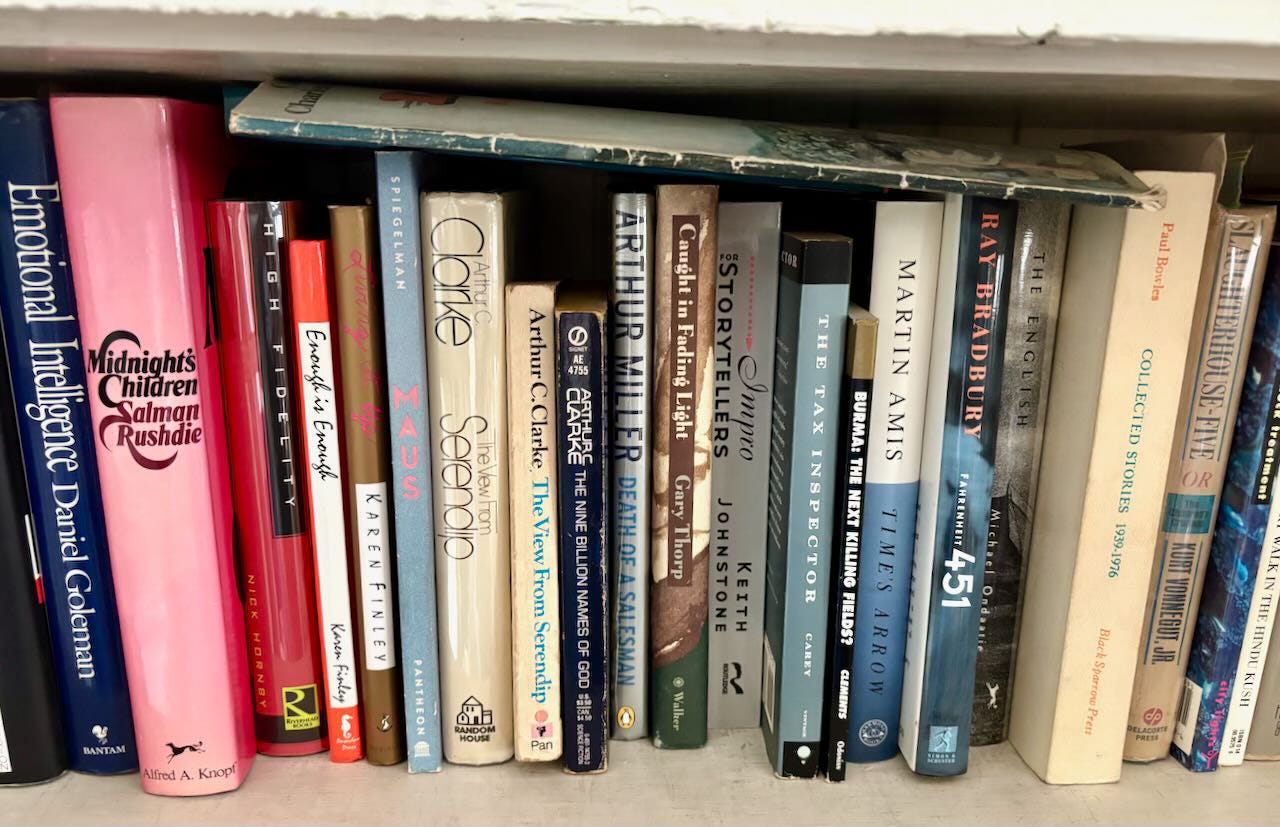
Anyway, yes, Sam, it’s a dying, or very seriously threatened, pastime. I can count on my fingers (and not even all ten of them) the people I know who remain voracious readers at this point in history; friends who do spend an hour or more each day gazing intently at physical books or eBooks, and immersing themselves in the incomparable joy of reading. I hope that whatever the future portends, no matter how lamed or busy I get, I never lose that passion. It’s one of the reliable things that have kept me sane — ever since I was a kid, reading The Spaceship Under the Apple Tree while sitting on the floor of the Plainview Public Library.
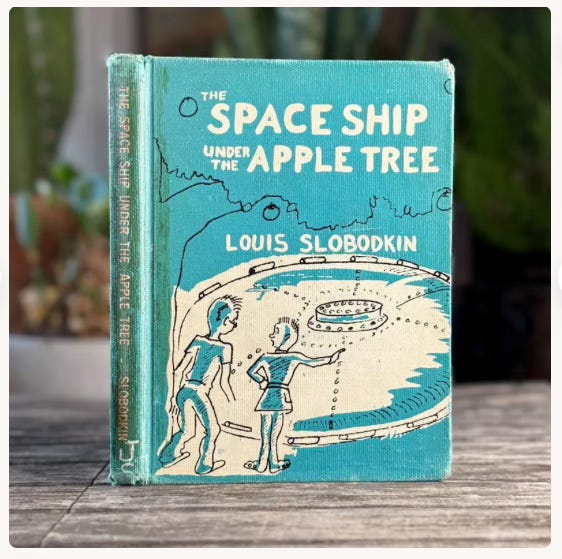
I’d prattle on about the roots of my science fiction addiction. but it’s eight p.m. and I can barely keep my eyes open. The reason: Today I undertook something I’ve done only once before: a “psychedelic therapy” journey. Having completed three initial sessions with me, my experienced and insightful guide came over this morning at 9:30 and opened her bag of tricks. I downed a delicious tea of lemon, honey, and four grams of Golden Teacher mushrooms, and lay back on my bed with two pillows under my head, a pillow under my knees, and a light-blocking mask over my eyes. The next three to four intense hours (which my guide prefers to call “somadelic” therapy) were followed by a ketamine chaser, which sent me careening toward the edge of the galaxy (this one, I think)… Just the sort of place where that “Secret Power Z”-fueled spaceship might hang out.
One of the reasons I do these guided journeys is to navigate the labyrinth of my condition. The very foundation of my sense of self, of my entire identity as an adult, is called into question by the effects of the Parkinson’s, and coping with this requires imagination, commitment, and some unorthodox strategies. I can’t say that either of my two forays into psychedelic/somatic therapy have been unqualified successes, but there are moments under the influence when I am able to see through the disease; not to the other side, but to a place where I’m able to hold it in the space of a rewarding, ongoing life. That itself is no small feat.
But the long day has left me left me drained, and I think I’m just going to rest the remainder of this eve and tomorrow. Maybe even with a good book. If my eyes will focus.

While we’re on the theme of precarious journeys (and libraries): Next Saturday, June 6, I’ll be appearing (for the fourth time!) at “The Naked Truth” storytelling series at the Mill Valley Public Library. Tickets are scarce, but I think there might still be a few available. I’ll be one of four storytellers that evening, hosted by the inimitable Don Reed.
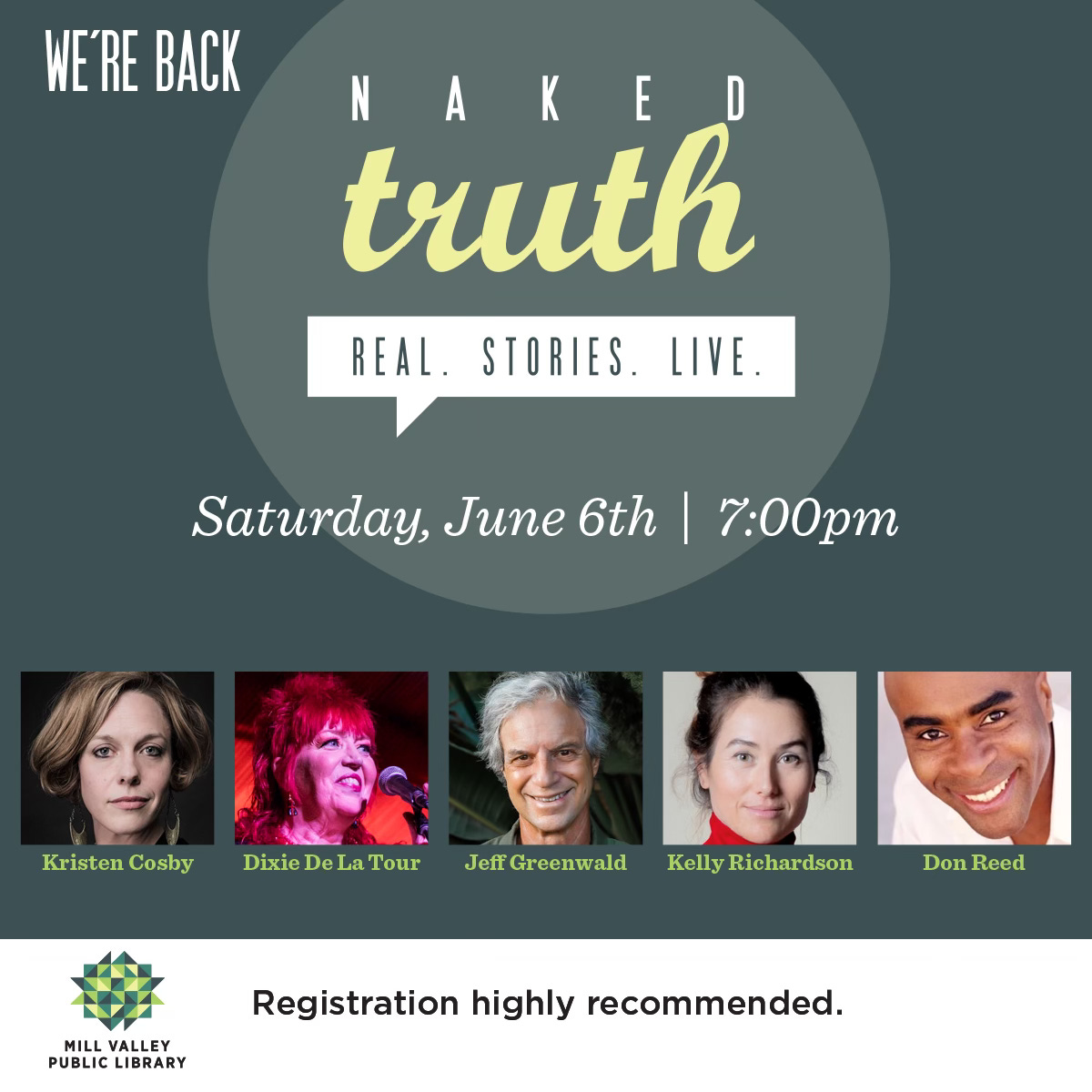
Evenings and nighttimes my Parkinson’s is most pronounced, and I am at my most symptomatic (i.e., physically awkward and uncomfortable). I don’t know how I’m going to pull this off, but as always, I’ll give it my best shot. My mind may wander, my legs shake and my mouth flap a bit, but I hope to tell a pretty good story nonetheless. Wish me luck.
I can’t believe you can read 3 books at the same time!
My goal, when I retire from my current job, is to read fiction (uninterrupted) for at least an hour a day. A modest goal, to say the least, but my reading has been dominated by science (journal) articles for the past 40 years, to the point of exclusion of everything else (other than student papers, of course) - a sad state of affairs for someone who was once a literature major (long story).
And I will definitely only be reading one book at a time. :)
Four grams?!? Dang, kiddo...!!!
I've heard from other folks who have done these types of therapies that the question of success has to do with integration after the experience is over. Do you have follow up sessions where you can further process those "moments under the influence when I am able to see through the disease; not to the other side, but to a place where I’m able to hold it in the space of a rewarding, ongoing life," in a way that can be integrated into moments when you are *not* under the influence?