
Looking Back
Your Name Here / Still juggling Kryptonite

It has been two years and one day since I launched this Substack — with the now odd-sounding name of “Jeffji’s Big World” — and I thought I’d celebrate by doing something that I have not yet done: give myself a week off!
But then my beloved friend Iris sent me this wonderful diversion and I thought I would share it with you, just to remind everybody that whether or not we’re aware of it, the Earth has our names written all over it.
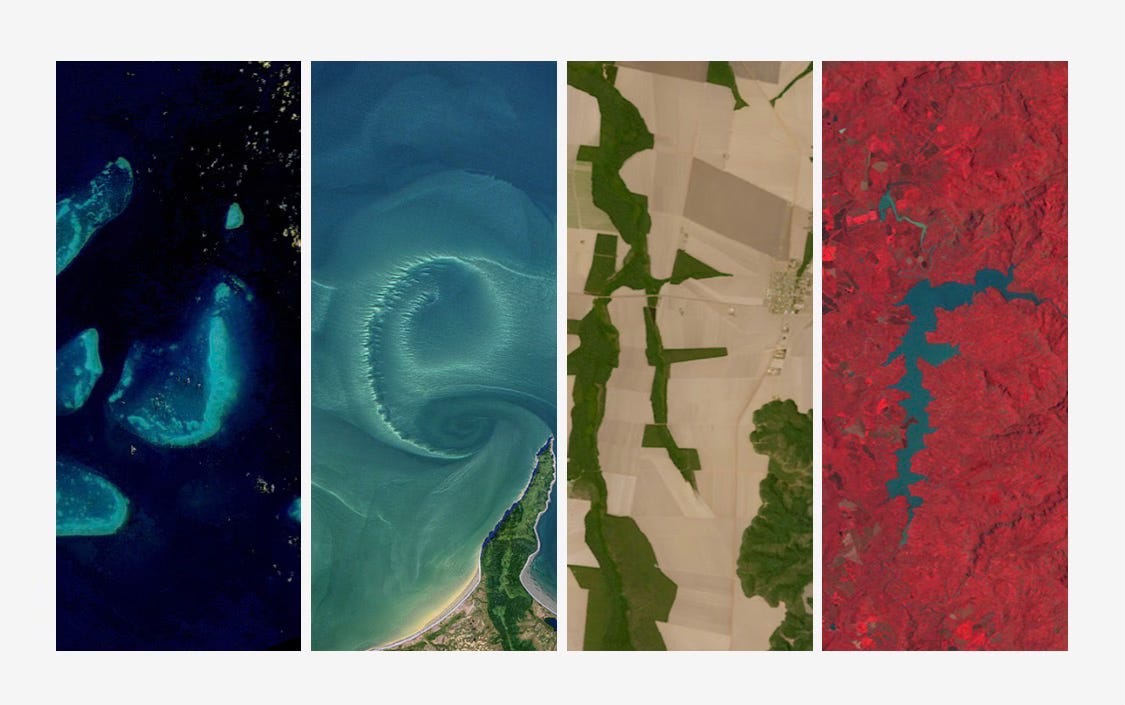
You can do it, too. It even tells you exactly where each letter was photographed.
Spell Your Name with NASA’s Earthly Alphabet of Aerial Images
Fun, right? I love this planet so much! NASA’s pretty great, too....
So sticking with the space theme, what I’m going to repost is the first ‘real’ Substack I published here on May 10, 2024. For those of you who weren’t with me back then it’ll give you a sense of what I’ve been trying to do with this medium. I feel like I’m more or less succeeding, and (as I hope you can tell) I’m really enjoying the process. I hope you have been, too.
Thanks so much for all your support and love and I’ll see you back here next week with a new post. Meanwhile, Here is my post from May 10, 2024.
We Are “Go” for Launch
Rocket Fuel, Dopamine, and the Dark Powers of Kryptonite
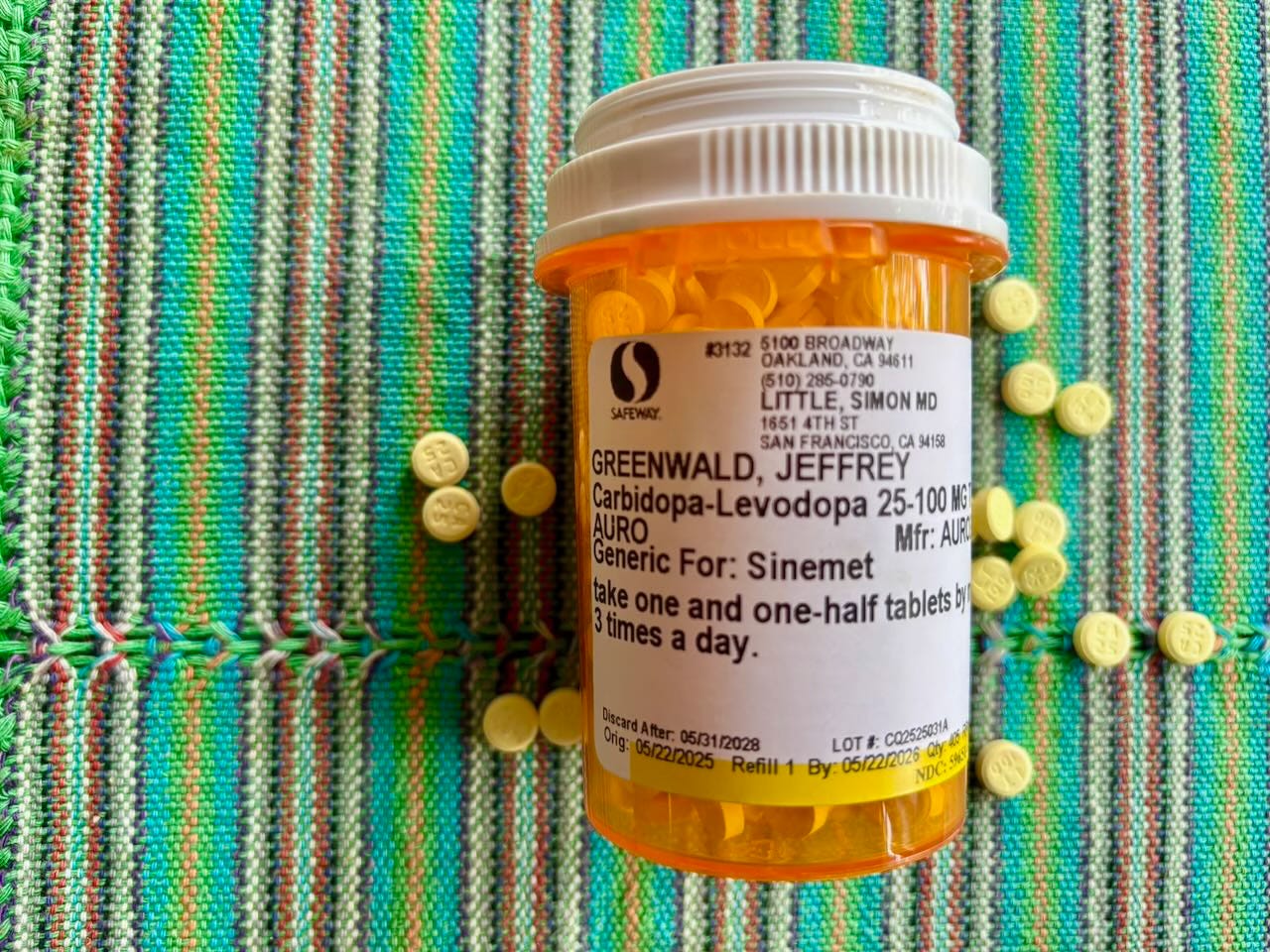
Thank you for being here. Guess that’s as good a place to start as any.
Launching a Substack platform feels, in some ways, comparable to an actual rocket launch; you’re staring up at this risky thing you’ve put together—this elegant vehicle for exploration and discovery—hoping it won’t blow up on the pad.
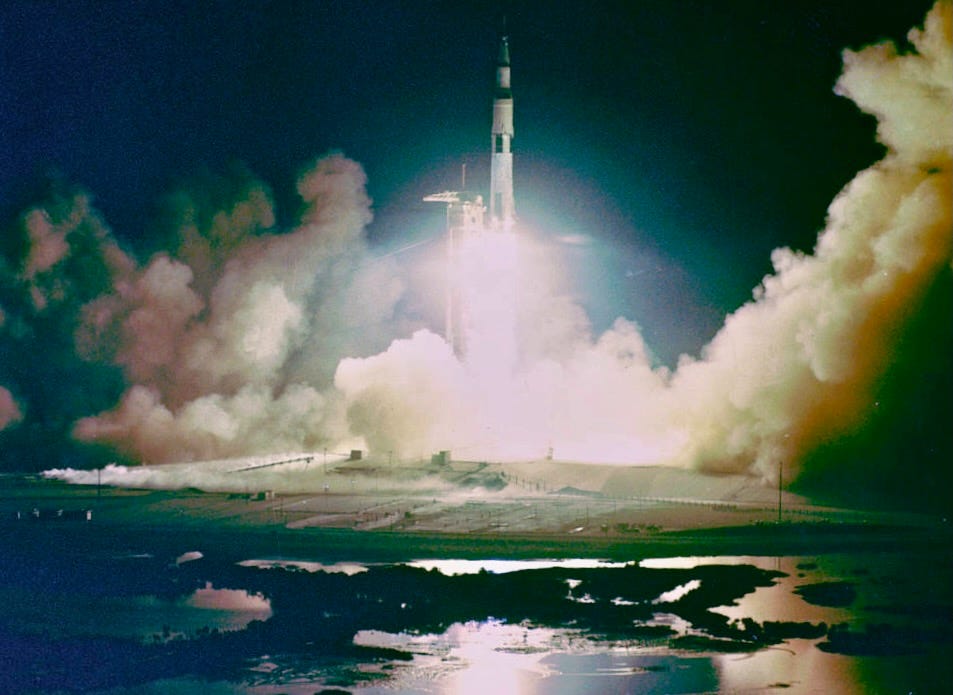
And it just so happens that my very first writing assignment, for Nassau Community College’s weekly newspaper, was the launch of Apollo 17: the final trip to the Moon by human beings. I was 18. It was the first time I’d flown anywhere on my own, and the first time I’d rented a car. That alone made me giddy; but knowing that I’d personally witness one of NASA’s enormous moon rockets actually taking off—after watching the launches on TV since I was 14—was thrilling beyond description.
The date was December 7, 1972, and the 36-story high Saturn V rocket—60 feet taller than the Statue of Liberty—stood on Launch Pad 39A at Cape Kennedy, venting steam. Because of a technical glitch, take-off had been delayed; Apollo 17 was now scheduled for 12:33 a.m.. It would be NASA’s final Apollo mission, and the only night launch of a Moon rocket.
I stationed myself near the bleacher-like Press stand, three miles from the pad, across a narrow strait of water. The spaceship was illuminated by floodlights. On a nearby numerical display (this was pre-LED), the countdown ticked toward zero; and in seconds, the black of midnight exploded into blinding orange daylight. The Florida sky filled with panicked waterfowl, and the ground shook with earthquake intensity. The roar was a physical force; it knocked me to my knees. We watched the flare of this artificial sun as long as we could—awestruck by the fact that three men sat in a tiny capsule just above it, off on a 12-day journey to the Moon.
Okay, so maybe the analogy is a little strained. But this feels big, nonetheless.
That’s partly because one of the subjects I’ve decided to play with here is Parkinson’s. I didn’t come by that decision lightly. From the moment of my formal diagnosis, in April 2021, I decided that the condition was no one’s business but my own. And though a few friends encouraged me to write about it, I resisted. For one thing, I didn’t want to define myself in that context. For another, I doubted I had anything new to say. Many people have written about their experiences with PD, with much more medical research and urgency than I can muster.
But ultimately I changed my mind. There’s so much confusion about the disease, and so many angles from which to view it, that my own trajectory through it began to feel, well, singular.
It started quietly, as so many things do. I noticed that, when I tried to slip my left arm through the strap of my Jansport daypack, the arm would start to shake. Around the same time I began to experience a strange kind of depression. I’d wake up in the morning with a heaviness on my chest, feeling unbearably sad. I searched my mind, looking for reasons I might feel so crappy; but honestly, nothing seemed worthy of the utter despair that enveloped me in those early hours.
I understand now that both of those symptoms were related to my body’s diminishing ability to produce dopamine: a neuromodulator directly involved with an astonishing number of physical and cerebral functions—from motor control to memory; from executive function to the ability to feel joy. This, primarily, is what Parkinson’s is: a disease that disables, quickly or gradually, the body’s inner flow of dopamine.
One of the first things you hear after your PD diagnosis (or in my case, during it) is the familiar adage, “if you’ve seen one person with Parkinson’s, you’ve seen one person with Parkinson’s.” It’s a bit like Red Kryptonite, which made Superman (and other Kryptonians) behave in weird, unpredictable ways; in a very real sense, no two people experience Parkinson’s in the same way.
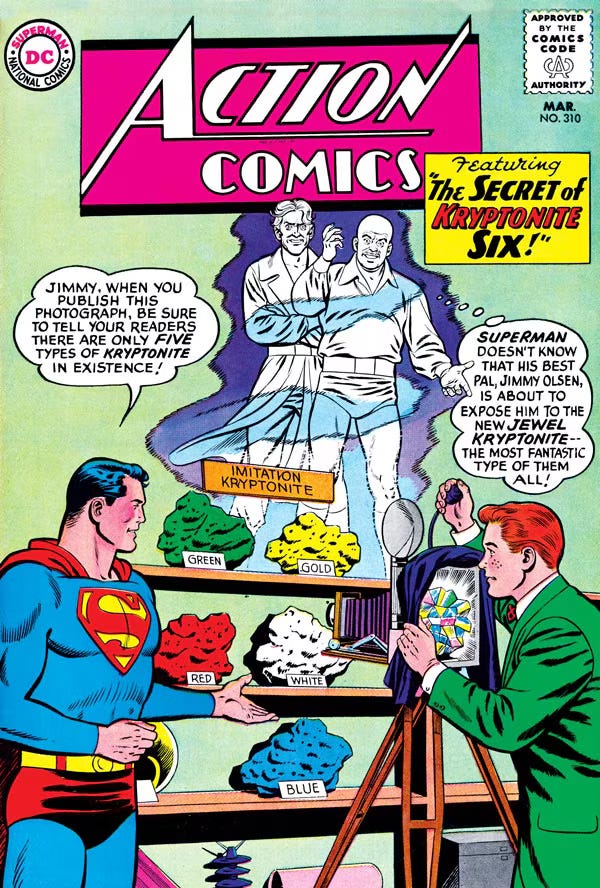
But it’s also like Gold Kryptonite, which “may not destroy Superman, but will strip away his superpowers forever.”
Okay. So given that writing (if you’ll allow) might be my only superpower... we’ll see about that. And over time I’ll also provide the inner view of the other “weird, unpredictable ways” I’m already being affected (if you haven’t noticed them already).
That’s enough about that for now. I promised I’d pace myself, keeping each of the PD dispatches to 350 words max... and I’ve already exceeded that limit.
But if you’re not ready to stop reading, here is a link to my latest piece for Craftsmanship, published today. It’s the colorful middle story about “Dissectology.” And let me say right now that not a single person I asked could guess what a dissectologist does; even dissectologists themselves had never heard of the word. (Take note, Alie Ward!).
That was the end of my first Substack post, in May 2024. But one more thing before we part. I don't know how many of you grew up listening to Cat Stevens, but his early albums were mainstays of my teens. One especially moving song was Father and Son, from Tea for the Tillerman, which seemed a direct commentary on the Vietnam-era “generation gap.” But the song’s true genesis — as I discovered on this episode of Song Exploder — is very different, and far more interesting. Check it out.
Thank you, as always, for reading,
Thank you! For this, and for the Craftmanship article. As it turns out, a couple of my fellow refugees from the same now-evil-megatech Silicon Valley corporation settled less than a mile from where I now live in Port Townsend to start their own shop for supplying dissectologists: https://www.artifactpuzzles.com/, so I now have a much deeper appreciation for what I used to dismiss as an unproductive idle passtime.
Congratulations on two years of bold, tender, beautiful Substacking! And wow—that Landsat tool for spelling your name is so cool! Thanks for sharing it! And thanks for sharing your journey. ❤️