
Let There be Lights
Pigs and Hammers / John Hancock et. al.

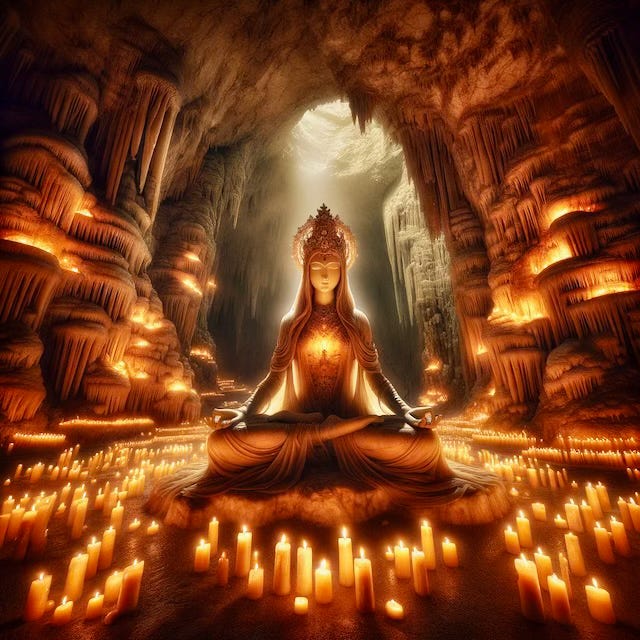
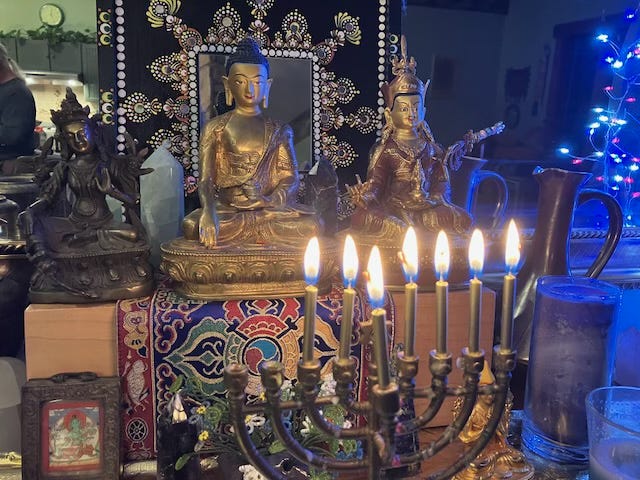
More than sixty festivals of lights are celebrated around the world every year, from Finland to Malaysia. Almost all of them are held at a time of encroaching seasonal darkness; but only about a dozen have a religious or spiritual underpinning. One I’m very familiar with is Diwali — celebrated in Nepal as an homage to Laxmi, the Goddess of (among other things) Wealth. The other, of course, is Hanukkah.
Though it was probably not as traumatic as discovering there is no Santa Claus, I remember my own disillusionment upon learning that Hanukkah is not a “real” holiday; at least not the way it is celebrated in North America. Granted, it is older than Kwaanza (which was created in 1966 as a seven-day, Pan-African celebration of Black history, values, community and culture). But Hanukkah is not in the Old Testament, and the very word itself means not “crispy latkes,” but “dedication.”
The eight-day Hanukkah holiday is rooted in the second century BCE, when a group of Jewish rebels, led by Judas (“the hammer”) Maccabeus, fought a three-year battle to wrest Jerusalem and the Second Temple from the Syrians. Though Maccabeus’s army prevailed, the temple was a wreck; the King of Syria was an idol worshiper, and the temple’s altar was now a place to sacrifice pigs, of all things, to Zeus (a scenario which my Yiddish-speaking friends will agree is probably history’s most extreme illustration of the word treif ).
When the Temple was reclaimed in164 BCE, it had to be rededicated — a process that includes restoring the Eternal Light, a (traditionally oil) lamp that is meant to burn continuously. The Maccabees did find a small supply of pure oil, but only enough to last a single day — a fresh supply would take eight days to reach them. But that tiny jar of oil burned steadily for eight days and nights. Therein lies the Hanukkah miracle… And the reason some Jewish kids get presents (but alas, no tree) for eight consecutive nights.
It was not always thus. The idea of gift-giving on Hanukkah didn’t even begin until the 1500s, when Sefardic Jewish communities observed “Dedication Day” by collecting gelt (money) to buy or make clothes for poor local school children. It wasn’t until the 19th century that Jewish parents in Europe started giving coins directly to their own kids.
Cut to New York, about a hundred years later, as the tenements filled with Jewish immigrants. By the 1920s, New York candy-makers like Loft’s and Li-Lac were producing chocolate gelt, wrapped in gold foil. But the current, Christmas-busting trend featuring eight consecutive nights of gift-giving (on an ascending scale, climaxing in enormous, often unwrappable presents like my Flexible Flyer sled), didn’t start until after the Second World War.
And though it now seems obvious to me (I never put this together before) the other now-traditional way to commemorate Hanukkah is to deep-fry foods in oil, pretending that a measure sufficient to fry a single latke will miraculously fry eight (which, to my mother’s knowledge, has never actually happened).
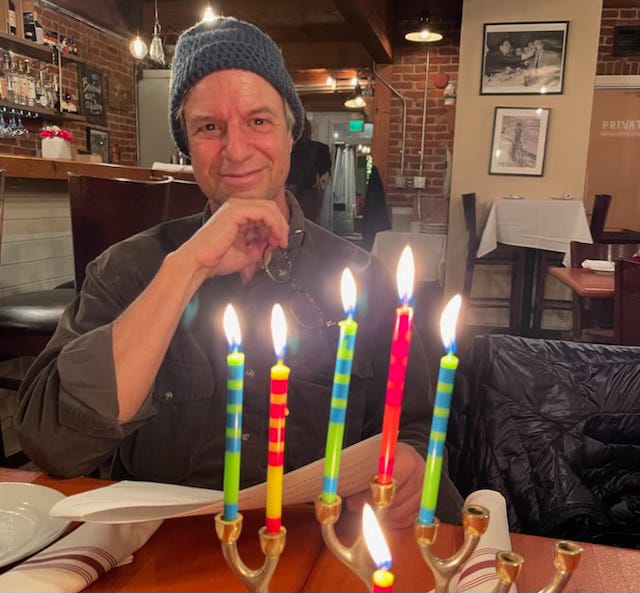
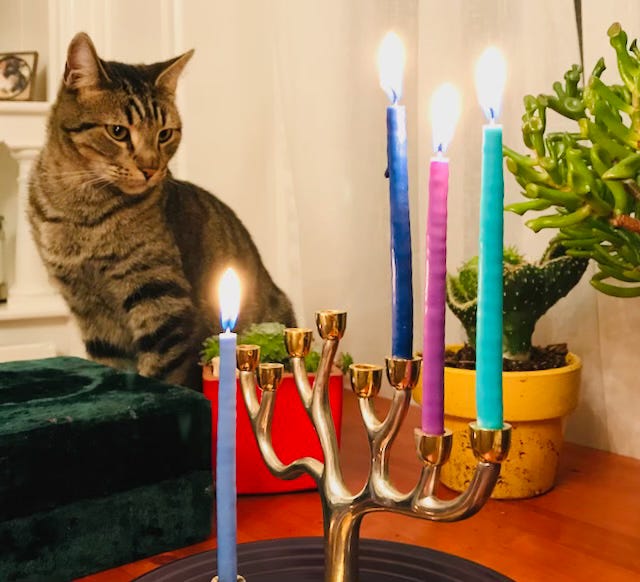
There were several more interesting things I wanted to write about for this Substack, but the timing was off, so I hope you’ll be contented with this offering; the equivalent of a first night gift of socks. At least it’s timely; the first two lights of this year’s Hanukkah holiday (the first candle, along with the nightly shamash, or “helper” candle) will be illuminated on the evening of Sunday December 14th, and the last on the 21st. (Pop-up quiz for non-Jews: How many Hanukkah candles come in a full box?) (Pop-up quiz for Jews: How come they never give you an extra candle, like, in case one breaks?)
I recently started to watch the new six-part, 12-hour Ken Burns documentary, The American Revolution. Like all of Burns’ series it’s dense and fascinating, and I’m filled with admiration for the way he makes all of his subjects, from Jazz to Vietnam, come vividly alive.
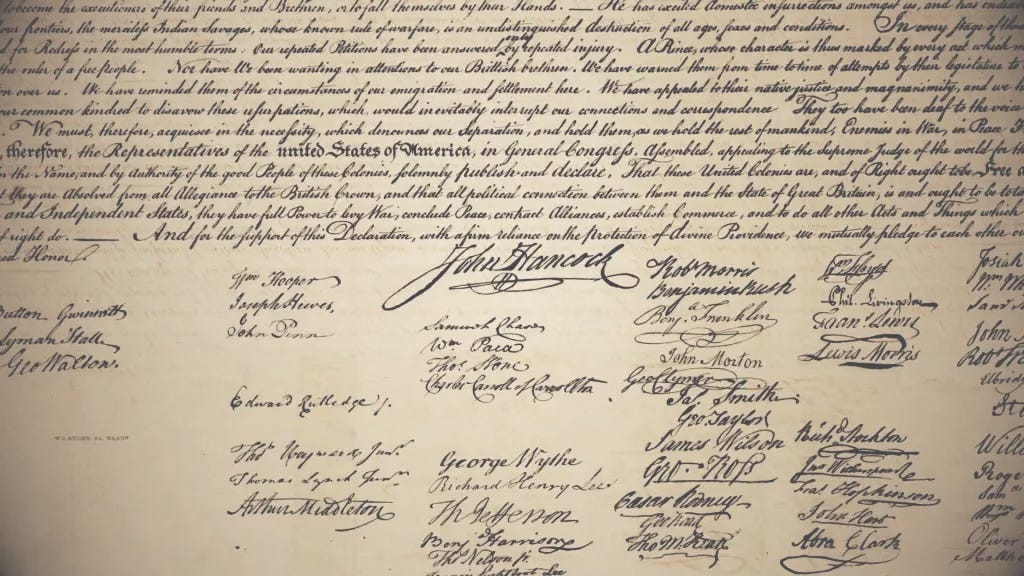
Photography hadn’t yet been invented during the 1700s (that didn’t happen until 1820), so Burns’ team wasn’t able to find any direct imagery. They relied instead on nature shots, paintings, reenactments, and letters. Looking at the letters written (using an inkwell and quill) by the founding fathers, one is struck by how beautiful their handwriting is, and how precise their use of language.
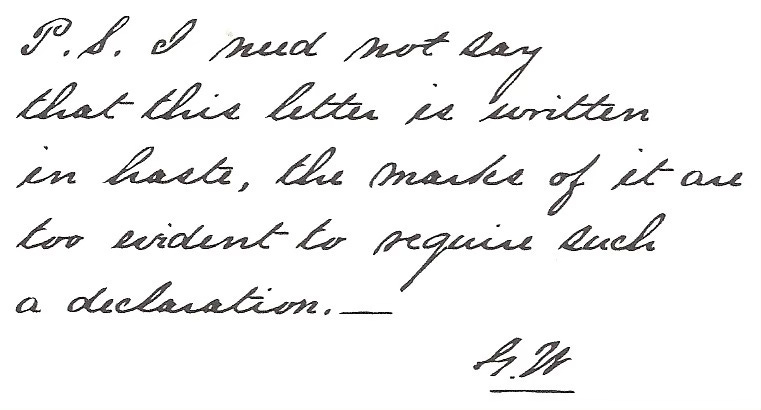
Sometime during the past year, I lost the ability to write longhand. My (left) hand simply won’t follow the instructions sent by my brain, and skips right over some letters. I don’t know if this is typical of people with Parkinson’s, but it’s disconcerting. At an event for Size of the World on Wednesday eve I dictated my dedications to the buyers, then signed below. It was weird, but a solution. Typing, as well, requires continual error-correction.
I can tell you this: It’s very strange to be a writer who can no longer write, at least not quickly or spontaneously. It’s a huge obstacle, situated directly between me and my life’s work. (I can’t help but think of poor Beethoven, who suffered nearly complete hearing loss by his 40s.) Last night, a friend and I were talking about the physical act of writing down words. which has a strange, therapeutic power. When a word emerges onto a page, typed or written, it has a physical presence, and carries the energy of the instrument that produced it — whether a keyboard, a quill or even a spray can. It’s a quality that dictated words don’t share. Yes, spoken words can be powerful, but they engage the brain in a different way. Removed from the physical act of writing, I feel somewhat removed from the creative aspect as well – as if the actual performance of writing unleashes a creative power that’s lost when speaking. It’s like the difference, I imagine, between actually carving a sculpture or feeding the design into a 3-D printer.
I’m not sure what I can do about this. My strategy so far has been to dictate, then do a bunch of hunt-and-peck editing — adding nuance, removing repetition and revising word choices. I’m definitely on the slow boat to creativity these days.
Nonetheless, I’ll continue to put words together as best I can. And I’ll keep hoping for a miracle; I hear they can happen this time of year.
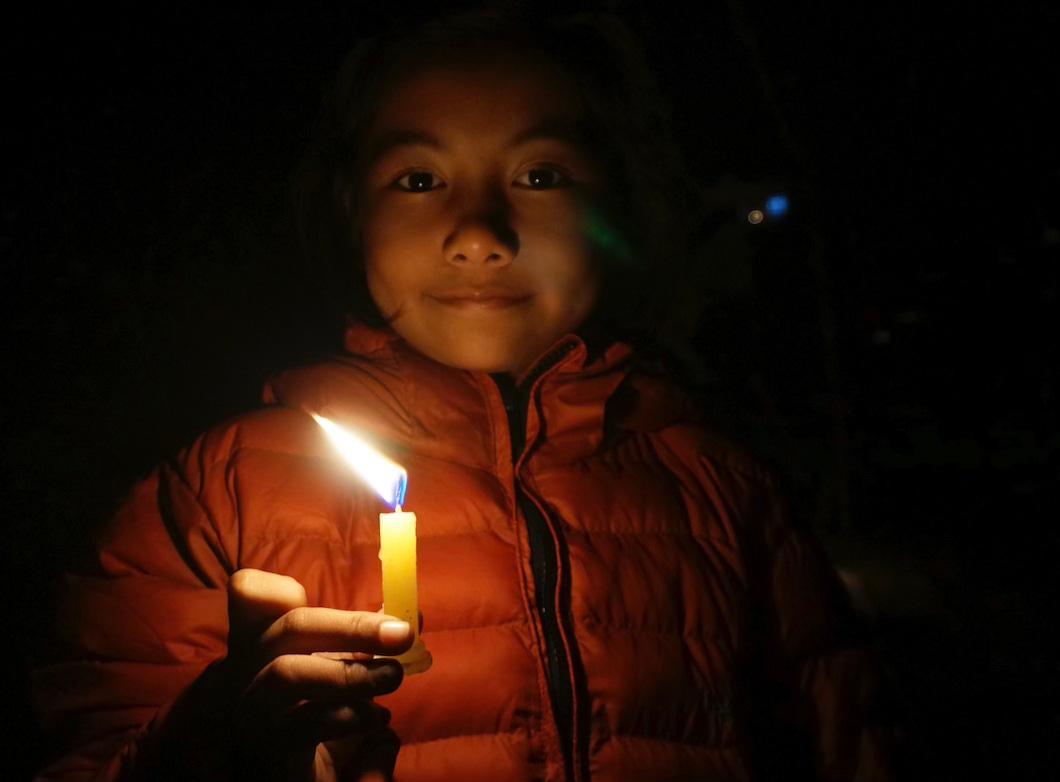
Thanks for reading. Wishing you all a Happy Holiday and, if it applies, a luminous Hanukkah. I’ll return to the page, virtual though it may be, shortly after Christmas.
Note: Many of you have asked where you can buy copies of The Size of the World: 30th Anniversary Edition as holiday gifts. The only way to get them on time at this point is via Amazon. I think it takes two days.
Thank you, Jeff, this was a fascinating walk through history, which I loved.
Along with that, your reflections on writing and your connection to it was deeply impactful. Your words will always have power, regardless of how they’re expressed.
Alas, the history of violence, intolerance, and religion have been inextricably linked from time immemorial. And so I have to add one more element to the story of Chanukah that you related, Jeff. As I understand it, the incident that triggered the war between the Maccabees and the Romans was that a member of the Maccabee clan killed a secular Jew because he was bowing to a Roman statue, something the Maccabees considered sacrilegious. It was this that caused the Roman authorities to move for Maccabee’s arrest at which point the family and their supporters fled to the hills and fought the Romans. I say this as a reminder —to myself as much as anyone else— that history is complicated and so often disappointing but what gives me hope is ability we have eventually to transform and transcend the horrific events that give rise to these holidays into celebrations of religious freedom, peace, light, and thanksgiving. And, of course, latkes.