
"Bring it to the Path"
Pilgrimage / The Broken Vase

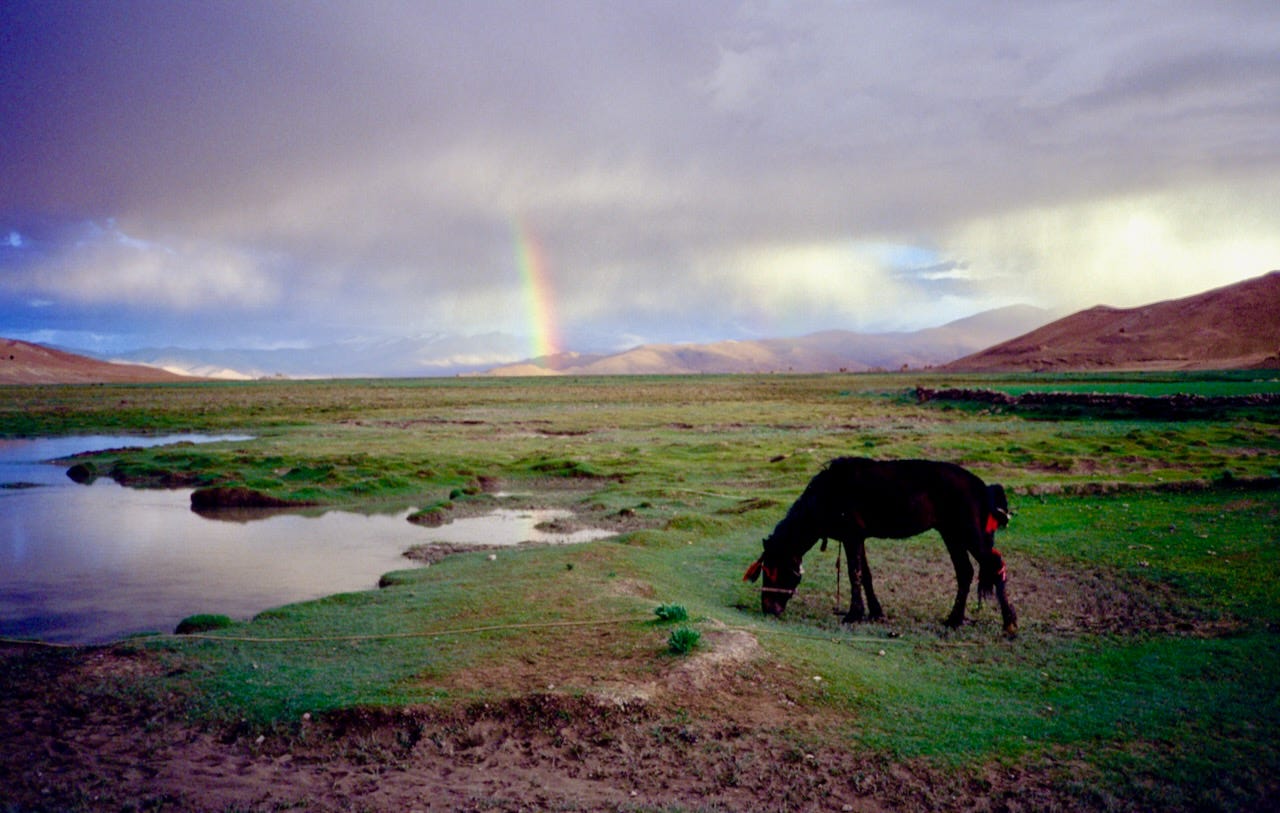
A warm greeting to you all. In this post I’d like to begin with a little story about an unexpected encounter in a place where, once upon a time, the very air seemed to pulse with currents of magic and mystery. The second part of my post, as always, will focus on my journey with Parkinson’s.
Thirty years ago this week, I arrived in Tibet. The visit was part of a round-the-world journey to celebrate my 40th birthday. The trip was, in truth, a pilgrimage: My intention was to step out of my front door in Oakland and circle the globe without airplanes—thus performing a devotional kora (a mindful circumambulation) of planet Earth. My goal? To truly comprehend the size of the world, and write about my odyssey in a book with that title.
By the time I arrived in Lhasa, after a harrowing three-day drive from Kathmandu, my journey was in its fifth month. I’d crossed more than 20 countries. I was exhilarated, but exhausted. Bad things had happened. My laptop, with all my journaling, had been stolen on the overnight bus to Nepal; my tongue had mysteriously (but temporarily) turned black; I’d missed the central motive for my trip, which was to join a friend’s expedition to Mt. Kailash; and I had a nasty head cold. I was fed up with this pilgrimage business, and sorely tempted to hop on a plane back to SFO.
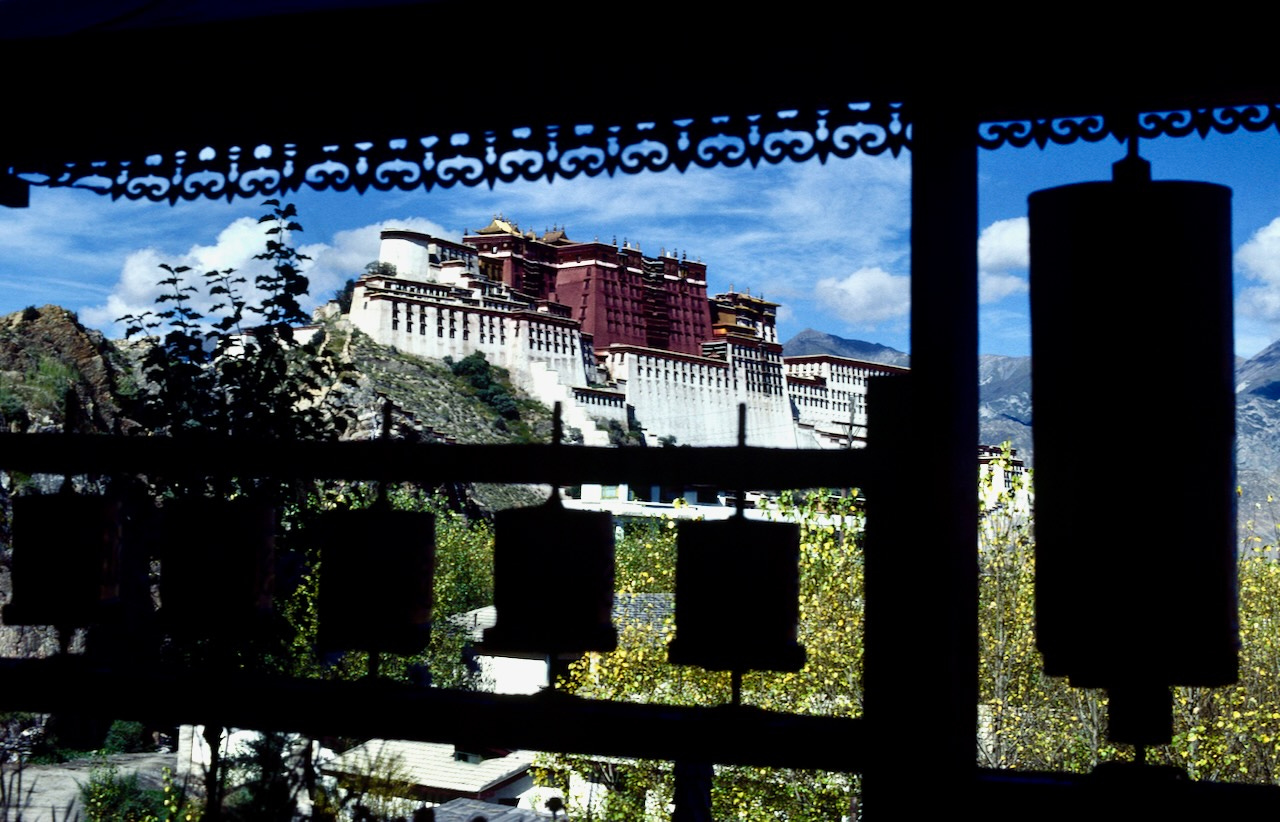
Yet there I was, on a busy street below the exiled Dalai Lama’s former palace, shopping for nasal spray in a Chinese pharmacy. And that’s when I saw the nomads.
There were two of them, in ragged robes, carrying a cardboard box with holes punched in the top. I could hear something scratching from within. When they opened the flaps to show the pharmacist, my hair stood on end. Inside was a baby snow leopard. The nomads, it seemed, had killed the mother (which was eating their livestock) and found this cub. The pharmacist, they imagined, might purchase the animal; snow leopard bones are used as ingredients in traditional Chinese medicine.
What happened next is a crazy tale; you can read it in The Size of the World. To make a long story short: The pharmacist, perhaps spooked by my presence, said no. I then brought the nomads to a local friend’s home. We bought the snow leopard, which was eventually—through a series of uncanny coincidences—placed in the care of renowned wildlife expert George Schaller (of The Snow Leopard fame), who was visiting Tibet on assignment for National Geographic.
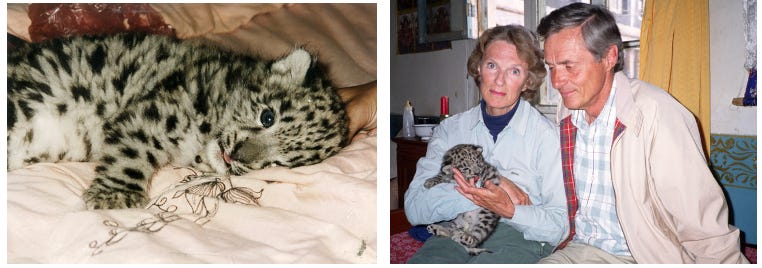
Pretty cute, eh? But the point of this story is this: Every good and bad thing that happened to me on that pilgrimage—every delay and obstruction, every material loss and sick day—had led me directly to that pivotal moment in the pharmacy. It was as if a hidden hand had directed my travels specifically, with an ultimate purpose: saving the life of that rare and endangered animal.
It’s a theory worth thinking about. And before I move on to the second part of this post, I’d like to share a story from a book written and photographed by my beloved friends Carroll Dunham, Thomas Kelly, and Ian Baker, Tibet: Reflections from the Wheel of Life:
Chatral Rinpoche, a lama from eastern Tibet renowned for his freedom from worldly attachments, was once on pilgrimage with several of his disciples. They stopped at the house of a wealthy trader, who offered Chatral Rinpoche a priceless vase from the Ming dynasty. The vase was carefully wrapped and secured in one of the horse’s saddlebags. As they continued on, however, much bickering arose among the disciples over who should look after the porcelain vase. Finally, Chatral Rinpoche took the vase out of the bag held it aloft, and said, “I’ll show you who will take care of it, ” whereupon he broke it over his knee. The priceless porcelain shattered into shards on the ground. “From this point on, ” Chatral Rinpoche stated, “our pilgrimage begins.”

Before we leave the theme of pilgrimage, I’d like to share an expression used by Tibetan pilgrims on difficult journeys: Kam sher, Lam kyer. “Whatever happens; whatever arises; bring it to the path.”
It’s hard to do that with fear. But fear is an integral part of the Parkinson’s experience, ever in competition with hope. When I was first diagnosed, in April 2021, my attitude was cavalier: “I got this.” After all... there’d be a cure in the next five years, right? But as the months go by, and the progress of this progressive disease makes itself felt, I’m sometimes terrified. Whose body am I in?
It’s not just about what I can no longer do today—travel unencumbered to strange new cities; trek in the Nepal Himalaya; improvise nimbly, onstage and off—it’s the sickening knowledge that I will continue to deteriorate. So it’s not just fear that I can’t do what I’d hoped to do; it’s fear that I can’t do what I agreed to do. Sometimes I feel as if I’m clinging, like Alex Honnold in Free Solo, to a cliff face. And despite the fact that I watch my diet, take my pills, and ride my bike for an hour each day, there’s no stable ledge in sight.
In February, Stanford and the American Parkinson Disease Association hosted a talk on the theme of Ambiguous Loss. The speaker was Dr. Nicole Reidy.
Ambiguity, Reidy said, occurs when we don't know what’s going to happen, or how we’ll be impacted. People with PD (and their partners) abide in a state of ambiguous loss and grief, aware that the disease will steadily change our lives in unpredictable, scary ways.
Loss, and grief. Sometimes, I’m almost overwhelmed. But what I’m grieving isn’t the fact that I have PD; it’s the loss of the person I was.
And the fear? That comes from the knowledge that the loss will be ongoing and—scariest of all—unpredictable. In my last post, I spoke of PD “the gift that keeps on taking.” What will it take next, and when? I compared it to free climbing; it’s also like navigating a battlefield. Fear is a constant companion.
Kam sher, Lam kyer.
Is there a way to bring fear itself to the path? To accept the monks’ shattered vase as a metaphor for the Jeff I’m desperate to hold onto? Is it possible to face that fear and grief, and live from day to day with acceptance, curiosity, and honesty about my trajectory? Next post, I’ll talk about a third aspect of my journey with Parkinson’s: Equanimity.
Your vulnerability is a gift, as always. Holding space for you in my heart. The Jeff you once were, the Jeff you are now, and the Jeff you will become.
I don't know if it was the story about the vase, or the concept of "bringing it to the path," or if I'm just a sucker for baby snow leopards but you earned yourself a subscriber with this one. I didn't know what to expect when I signed up for the newletter, but if this "episode" is any indication then I am here for it. I just hope I can digest this one before you drop the next one. I'm not sure I'll be able to keep up.